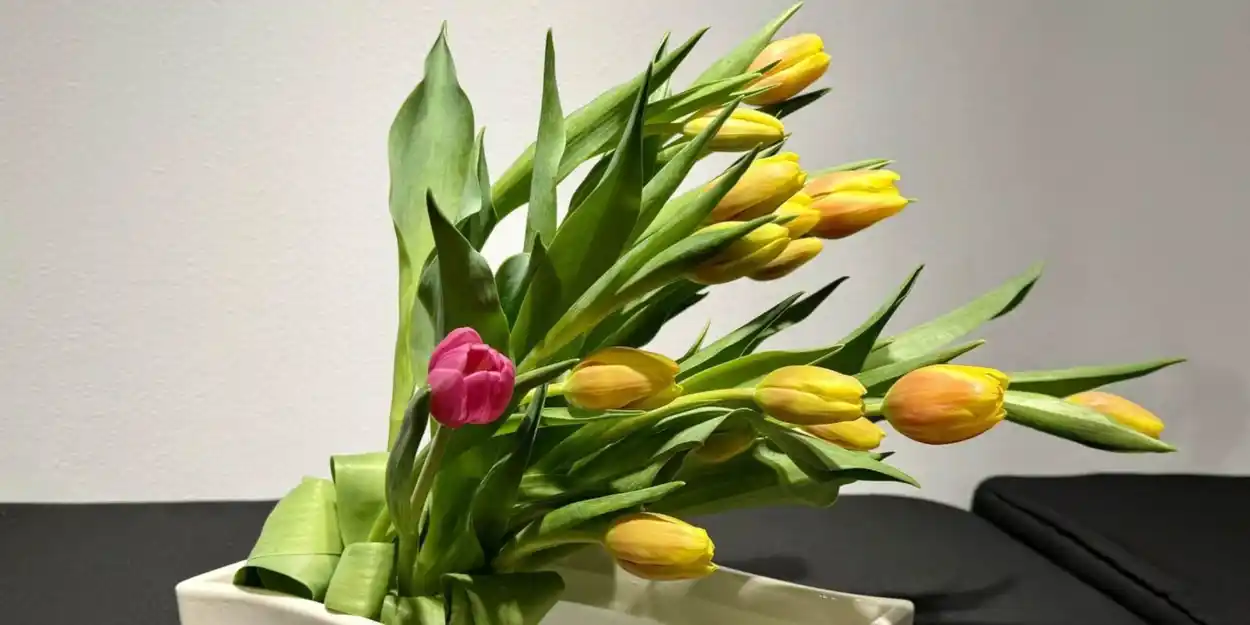
IKEBANA DEMONSTRATION WITH LINDA NISHIOKA
IKEBANA DEMONSTRATION WITH LINDA NISHIOKA
Saturday, August 29, 1:00 p.m. – 2:30 p.m.
Free and open to the public
Please make plans to join us for a special demonstration of Ikebana flower arranging, also known Japanese flower arranging, on Saturday August 29th from 1 till 2:30 pm in the Salem Art Association Art Barn.
Ike means “to give life to” and bana means “flowers”, so this is the art of making flowers come alive. Ikebana is a fun, enriching art form that brings life to plant materials.
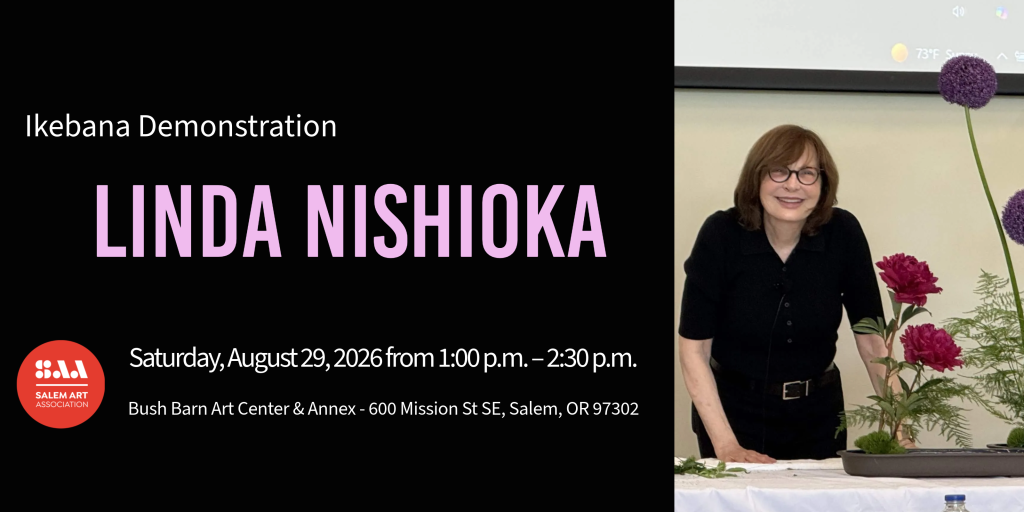
Linda Nishioka is a well known Ikebana practitioner who will demonstrate how to follow Ikebana guidelines and philosophy to arrange local plant materials into something truly beautiful. Linda, who is also one of our local City Council members, is Vice President of the Ohara School of Ikebana Oregon Chapter and a certified instructor. Linda does demonstrations and teaches classes to share her talent and creativity with others.
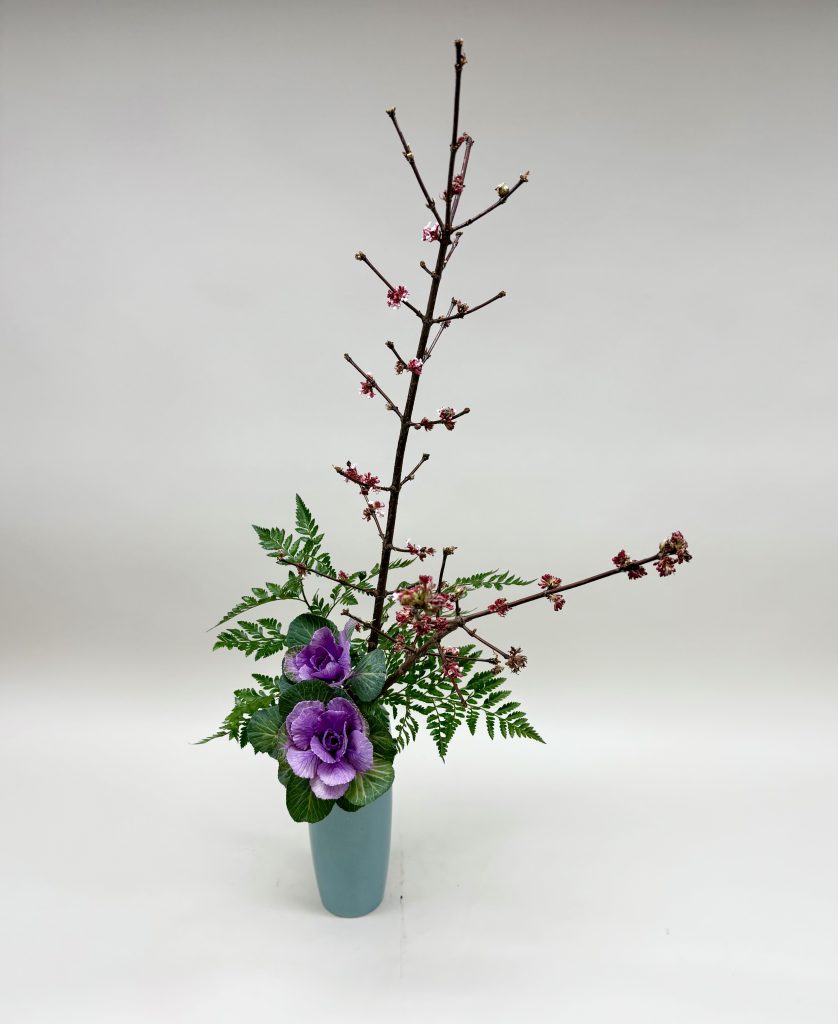
Class is made possible by the Mission Street Parks Conservancy.
Hosted by Mission Street Parks Conservancy at the Bush Barn Art Center Annex.
Enter through the Bush Barn Art Center Main Entrance, then head over to the Annex. Come a few minutes early and enjoy the artwork in the galleries!
Questions? Contact jhbattle@outlook.com
All are welcome to this free event, children should be accompanied by an adult., but registration is required.
All are welcome to this free event, children should be accompanied by an adult., but registration is required to help us arrange the space. Thank you!
ABOUT IKEBANA
The art of Japanese flower arranging, also known as ikebana, is a traditional form of floral decoration that originated in Japan. The purpose of ikebana is to create harmony between the flowers, the container, and the space where the arrangement is displayed.
Ikebana arrangements are typically composed of a few stems of seasonal flowers, branches, and leaves, arranged in an asymmetrical and natural-looking way. The arrangement is often designed to reflect the changing seasons, and the choice of flowers and containers is carefully considered to create a sense of balance and harmony.
In addition to its aesthetic purpose, ikebana is considered a spiritual practice. The focus on creating harmony and balance is believed to help practitioners find inner peace and connect with nature.
Overall, Japanese flower arranging aims to create beautiful and harmonious floral arrangements that reflect the natural world and inspire a sense of inner peace.
 Spanish
  English